
Packaging machinery manufacturing standards at Coretamp Factory
October 16, 2026
Why Do Manufacturing Standards Matter?
Two packaging machines may look virtually identical on the surface, yet perform vastly differently over years of operation. Long-term production stability depends far more on underlying packaging machinery manufacturing standards—including material selection, electrical integration, and mechanical assembly precision—than on initial appearance alone. Focusing solely on upfront machine price and maximum packaging speed often overlooks costly unexpected downtime, premature component wear, and inconsistent sealing performance. Well-defined manufacturing standards help improve equipment reliability, extend component service life, and maintain consistent packaging performance over time.
Material Selection & Food Safety Standards
Selecting the appropriate material grade is fundamental to equipment durability and sanitary compliance. For product contact parts, SUS304 stainless steel offers solid corrosion resistance for standard operational conditions, while SUS316 is often selected for highly corrosive, acidic, or saline environments depending on the specific medium, concentration, temperature, and cleaning agents used.
However, using SUS304 or SUS316 stainless steel construction alone does not automatically guarantee full compliance with food safety regulations. True food safety requires a comprehensive approach:
-
Hygienic Design: Eliminating dead corners, crevices, and sharp pockets where bacteria or product residue can accumulate.
-
Surface Treatment: Applying appropriate surface finishes—including optional treatments such as electropolishing based on specific project requirements—to support smooth product flow, reduce material buildup, and simplify cleaning.
-
Maintenance & Sanitation: Engineering structures for thorough cleaning, washdowns, and straightforward routine maintenance to satisfy regulatory demands.
The final material specification should be determined by the product characteristics, cleaning procedures, and applicable food-contact requirements of the target market.
Electrical Control & Component Selection
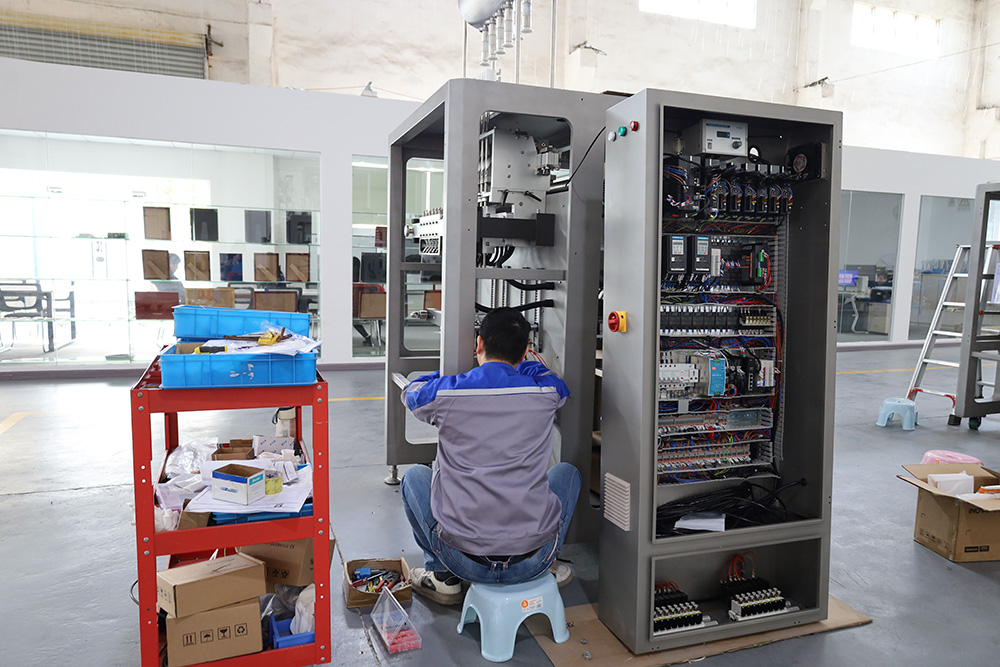
A reliable control architecture relies on selecting quality components tailored to specific equipment designs rather than relying on a fixed template. Hardware from globally recognized manufacturers is integrated according to precise functional requirements:
-
Siemens / Mitsubishi Electric: Used in select PLC control systems to manage machine sequences, operating parameters, and coordinated automation functions.
-
Omron: Provides high-sensitivity photoelectric sensors and detection units for rapid position identification and real-time signal feedback.
-
Schneider Electric: Supplies low-voltage electrical protection, relays, and components to support electrical protection, switching, and circuit control.
-
Airtac: Delivers pneumatic actuators, control valves, and cylinders responsible for smooth mechanical movements.
Depending on equipment specifications and customer operational needs, configurations vary; individual machines utilize specific component combinations based on application demands rather than incorporating all five brands simultaneously.
Mechanical Processing & Assembly Standards
Mechanical precision forms the backbone of long-term machine stability. During frame assembly, precise structural alignment prevents operational vibration, while careful transmission system inspection and thorough fastener connection checks ensure long-term structural integrity.
Key sub-assemblies demand specialized precision:
-
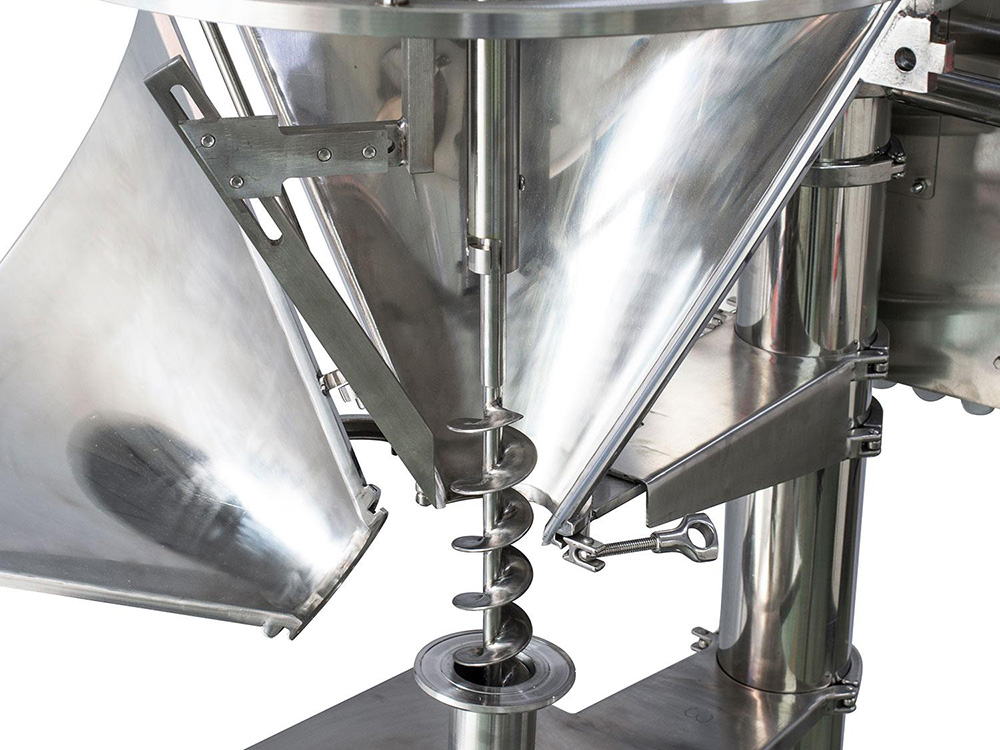
Auger Dosing Assembly: The assembly quality of the high-precision auger dosing mechanism directly impacts product feed stability and consistency in powder dosing.
-
VFFS Forming and Sealing Unit: Build quality across the Vertical Form-Fill-Seal (VFFS) forming, film-pulling, and sealing mechanisms governs bag shape stability, registration accuracy, and seal integrity.
Proper mechanical calibration helps minimize unnecessary friction and mechanical wear, supporting smooth and predictable operation.
PLC System Integration & Machine Testing
While mechanical build quality provides the physical framework, reliable automation depends on a well-integrated PLC-controlled packaging line system. The control system coordinates individual mechanical actions into an automated workflow:
-
Parameter Configuration: Tailoring PLC logic and HMI parameters for precise user control.
-
Signal Feedback Loop: Processing real-time data from photoelectric sensors to manage film-pulling, dosing, filling, and sealing in coordinated operation.
-
Safety & Exception Handling: Triggering automated exception alarms and safety protection mechanisms upon detecting operational deviations.
-
Validation Testing: Conducting systematic no-load trials followed by live product testing to verify operational stability before deployment.

Quality Inspection & Manufacturing Consistency
Maintaining continuous manufacturing quality requires multi-stage verification across the entire assembly lifecycle:
-
Incoming Component Inspection: Validating raw materials and electrical parts prior to assembly.
-
In-Process Audits: Inspecting mechanical alignment, frame squareness, and electrical wiring layout during construction.
-
Functional & Final Testing: Conducting functional dry runs and final pre-shipment inspections.
-
Packaging Performance Verification: Checking bag-forming consistency, sealing quality, dosing performance, film tracking, and overall operational stability under actual or specified operating conditions.
Factory test records and inspection logs are maintained to support quality documentation and production traceability for each unit.
Conclusion
At Coretamp, manufacturing standards are applied across our range of packaging equipment for powders, granules, liquids, and pre-made pouches. From material selection and electrical configuration to mechanical assembly and final testing, each machine is tailored to its specific intended application. Contact our team to discuss your product, packaging format, and production requirements.